


Earlier today, a informal Group of the Willing, mostly consisting of EU leaders, convened in Paris with envoys of President Trump, aiming to make further headway on a durable peace agreement for Ukraine.
With President Volodymyr Zelensky declaring that a framework to halt the hostilities with Russia is "90% of the way there", not a single person in that meeting desired to risk retaining the Americans engaged.
Yet, there was an immense unspoken issue in that grand and sparkling gathering, and the underlying mood was exceptionally uneasy.
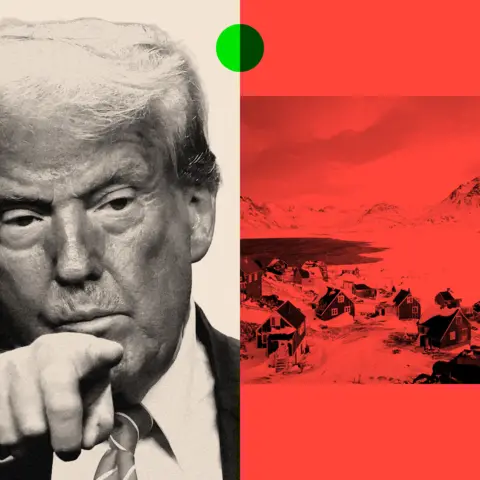
Bear in mind the actions of the last few days: the US administration's controversial incursion in the South American nation and the President Trump's declaration shortly thereafter, that "our national security requires Greenland from the viewpoint of strategic interests".
This massive island is the world's largest island – it's sixfold the area of Germany. It is located in the Arctic but is an semi-independent territory of Denmark's.
At the conference, Mette Frederiksen, Denmark's Prime Minister, was seated facing two key individuals speaking on behalf of Trump: emissary Steve Witkoff and Trump's relative Jared Kushner.
She was subject to urging from European colleagues not to provoking the US over Greenland, for fear that that undermines US backing for Ukraine.
EU heads of state would have much rather to compartmentalize the Arctic dispute and the debate on the war apart. But with the political temperature mounting from the White House and Denmark, representatives of major states at the talks released a declaration asserting: "This territory is part of NATO. Security in the Arctic must therefore be secured together, in conjunction with treaty partners such as the US".
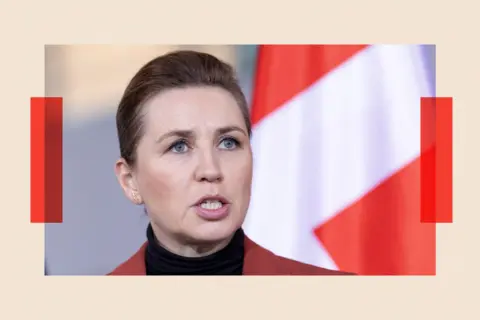
"Sovereignty is for Copenhagen and Greenland, and them alone, to decide on matters related to the kingdom and Greenland," the statement continued.
The statement was greeted by Nuuk's head of government, Jens Frederik Nielsen, but critics say it was delayed to be formulated and, because of the small group of supporters to the declaration, it was unable to demonstrate a Europe aligned in purpose.
"If there had been a common declaration from all 27 European Union countries, in addition to alliance partner the UK, in backing of Danish sovereignty, that would have delivered a powerful message to Washington," stated a EU foreign policy specialist.
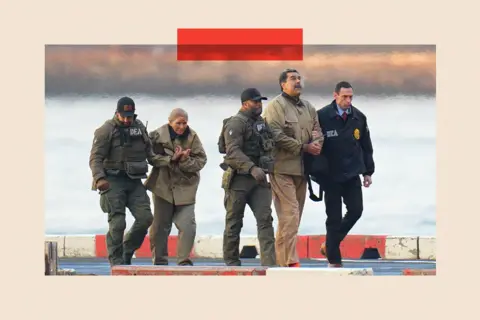
Consider the contradiction at work at the France meeting. Numerous EU government and other officials, from NATO and the EU, are attempting to secure the cooperation of the White House in protecting the future autonomy of a European country (the Eastern European nation) against the hostile geopolitical designs of an foreign power (Moscow), immediately after the US has intervened in sovereign Venezuela militarily, arresting its head of state, while also persistently openly challenging the sovereignty of another EU member (the Kingdom of Denmark).
To add to the complexity – Copenhagen and the US are both members of the military bloc NATO. They are, as stated by Danish officials, extremely strong partners. Previously, they were considered so.
The dilemma is, if Trump were to act upon his goal to bring Greenland under US control, would it mark not just an fundamental challenge to the alliance but also a major problem for the EU?
Europe Risks Being Marginalized
This is not the first time Trump has voiced his intention to dominate Greenland. He's floated the idea of buying it in the past. He's also left open the possibility of a military seizure.
Recently that the landmass is "so strategic right now, Greenland is frequented by Russian and Chinese vessels all over the place. Our security demands Greenland from the standpoint of national security and Copenhagen is incapable to provide security".
Denmark strongly denies that last statement. It has lately committed to spend $4bn in the island's defense including boats, drones and aircraft.
Pursuant to a treaty, the US has a strategic outpost currently on Greenland – established at the beginning of the Cold War. It has cut the number of personnel there from about 10,000 during the height of the confrontation to around 200 and the US has frequently been criticized of taking its eye off polar defense, until now.
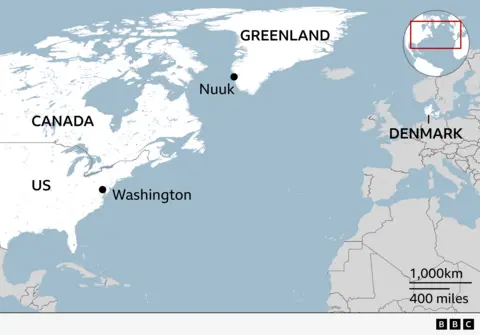
Denmark has signaled it is open to discussion about a bigger US footprint on the island and additional measures but in light of the US President's threat of independent moves, the Danish PM said on Monday that the US leader's goal to acquire Greenland should be considered a real possibility.
Following the Washington's moves in Venezuela this weekend, her counterparts throughout Europe are doing just that.
"The current crisis has just emphasized – for the umpteenth time – Europe's basic vulnerability {


